
From Salvage to Ready for Reuse: How Reclaimed Building Materials Are Cleaned and Prepared
2026-09-02
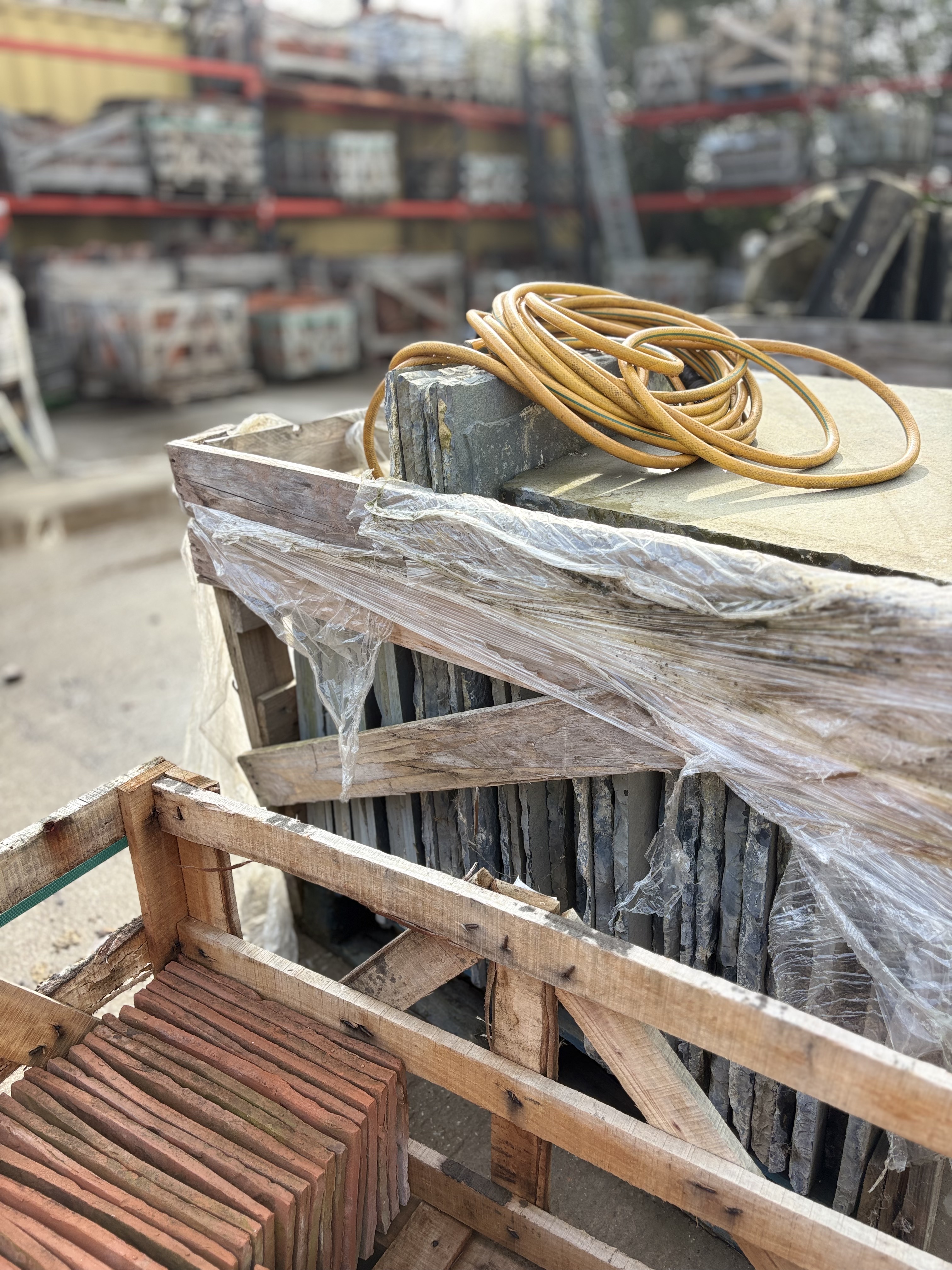
From Salvage to Ready for Reuse: How Reclaimed Building Materials Are Cleaned and Prepared
Reclaimed building materials rarely move directly from an old building into a new project. Before they can be reused, they often need to be recovered, cleaned, checked, sorted and documented.
Reclaimed building materials rarely move directly from an old building into a new project.
Before a brick, beam, slate, tile or piece of stone can be reused, it often needs to be carefully recovered, cleaned, checked, sorted and prepared.
That process is one of the most important parts of architectural reclamation.
Much of the practical value of a reclamation yard comes from turning mixed recovered material into stock that can actually be understood, selected and reused.
Recovery is only the beginning
The first challenge is getting materials out of a building without damaging them.
Traditional demolition can break, contaminate or mix materials together, making reuse more difficult.
More careful dismantling or deconstruction can preserve significantly more of a material's original form.
Once recovered, however, materials still need to be assessed before they are ready for another project.
Cleaning reclaimed bricks
Bricks are among the most recognisable reclaimed building materials, but recovering them in usable condition can involve substantial work.
Old mortar often remains attached to the faces and edges of the brick.
That mortar may need to be removed carefully so that the brick can be stacked, handled and reused properly.
The process also gives an opportunity to identify bricks that are badly cracked, heavily damaged or unsuitable for further use.
That sorting process becomes particularly important when reclaimed bricks are being used to match an existing wall or historic building.
Preparing reclaimed timber
Timber requires a different kind of preparation.
Recovered beams, boards and joists may still contain nails, screws, brackets or other fixings from their previous use.
These need to be identified and removed where appropriate before the timber can be processed or reused safely.
Surfaces may also need brushing or cleaning to remove loose dirt and debris while preserving the aged character that makes reclaimed timber attractive in the first place.
Record dimensions and useful lengths.
Identify and remove old fixings where appropriate.
Check for decay, damage or defects.
Keep timber dry and appropriately supported.
Cut or prepare stock where required.
Grade or inspect where structural performance matters.
The aim is not necessarily to make old timber look new. Weathering, saw marks, nail holes and colour variation are often exactly what buyers want to preserve.
Sorting reclaimed roof tiles and slates
Roofing materials can be particularly dependent on careful sorting.
Tiles and slates may look similar at first glance while differing in dimensions, thickness, colour, profile or condition.
Damaged pieces need to be separated from usable stock, while matching batches need to be kept together wherever possible.
Sizes, profiles and conditions may be mixed together with little usable information.
Usable pieces are grouped by relevant characteristics and quantity.
This can make a major difference when a roofer or homeowner needs material to repair an existing roof rather than replace the entire surface.
A well-sorted batch gives the buyer a much clearer understanding of what is actually available.
Cleaning and preparing reclaimed stone
Stone can often survive for generations, but that does not mean every recovered piece is immediately ready for reuse.
Soil, mortar, biological growth and other debris may need to be removed depending on the material and its intended use.
In restoration work, those differences can be extremely important.
A reclaimed stone that looks broadly similar may still be the wrong size, finish or character for the building being repaired.
Not everything can or should be reused
An important part of reclamation is deciding what is genuinely worth saving.
Some materials will be too damaged, contaminated or deteriorated to provide another useful life.
Others may be suitable only for decorative applications rather than structural use.
- Is the material physically sound?
- Is there significant damage or decay?
- Is contamination present?
- Is the material suitable for its intended application?
- Does structural or safety-critical use require further assessment?
Good preparation therefore involves more than cleaning.
It requires judgement.
The objective should be to recover as much useful material as practical while being realistic about condition and suitability.
Why sorting adds value
A pile of mixed salvage and a clearly sorted batch of reclaimed material are very different products.
Sorting makes it easier for a buyer to understand what they are purchasing.
It can also make matching considerably easier.
Buyers understand what is actually available.
Relevant batches can be compared with existing material.
Stock can be counted and grouped accurately.
Damaged and usable material can be separated.
For example, separating reclaimed bricks by colour and dimensions can help a customer identify a batch that blends more naturally with an existing property.
The same principle applies to roof tiles, stone, timber and architectural features.
Organisation turns recovered material into usable stock.
Good photographs and measurements are part of preparation too
Preparation is increasingly about information as well as the physical material.
A buyer searching online cannot pick up a brick, measure a stone slab or inspect a timber beam in person.
That makes accurate product information extremely important.
A useful reclaimed-material listing can include:
As reclamation becomes more digital, information could become almost as important as the material itself.
Preparation helps reduce uncertainty
One of the challenges with reclaimed materials is inconsistency.
Unlike a factory-made product, reclaimed stock may vary naturally from piece to piece.
That variation is often part of its appeal, but it can make buying more difficult if the stock is poorly organised.
Unknown quantity, inconsistent sizes and unclear condition.
Measured, sorted, documented and easier to specify.
Cleaning, sorting, measuring and documenting materials helps reduce that uncertainty.
It gives architects, builders, roofers and homeowners a better idea of whether a particular batch is suitable for their project.
The labour behind reclaimed materials is easy to overlook
A reclaimed product may have begun life decades or even centuries ago, but preparing it for another project can still require substantial modern labour.
That helps explain why reclaimed does not necessarily mean cheap.
The customer is not simply paying for an old material.
The customer may also be paying for the labour required to transform salvage into practical, usable stock.
Cleaning should not erase character
There is also a balance to be struck between preparation and over-restoration.
Many reclaimed materials are valued precisely because they show signs of age.
Weathering, subtle colour variation, old tool marks and surface patina can all contribute to the character of a finished project.
The objective is not always to make reclaimed material look brand new. Often, it is to make the material usable while preserving the qualities that made it worth reclaiming.
From waste material to usable stock
The difference between demolition waste and reclaimed building material can sometimes come down to what happens during recovery and preparation.
Direct reuse becomes difficult.
↓ Carefully removed + cleanedPotentially usable in another building.
Difficult to identify and recover.
↓ Removed + de-nailed + documentedCan become useful reclaimed stock.
That transformation is at the heart of architectural reclamation.
Preparation is what gives recovered materials another chance
Cleaning and preparation might not be the most visible part of the reclaimed-materials industry, but it is one of the most important.
It preserves materials that might otherwise be damaged or discarded.
It helps buyers understand what they are purchasing.
It makes matching easier and helps suitable products move into new projects.
Most importantly, it gives materials that have already served one building the opportunity to become useful again.
Have reclaimed building materials to sell?
Materials from demolition, renovation or surplus stock could be suitable for recovery, preparation and reuse.
Sell Reclaimed Materials →