
From Demolition to Deconstruction: How UK Buildings Are Becoming Material Banks
2026-09-02
From Demolition to Deconstruction: How UK Buildings Are Becoming Material Banks
What if the end of one building was treated as the beginning of another supply chain? Deconstruction changes the way we look at demolition by recognising the materials hidden inside a building before they become waste.
For decades, demolition has usually been treated as the final stage in a building's life.
A structure reaches the end of its use, it is taken down, and much of what remains is handled as waste.
But that way of thinking is beginning to change.
Across the UK construction sector, buildings are increasingly being considered as collections of materials that may be recoverable, reusable and capable of returning to the market.
That shift from demolition towards deconstruction could become one of the most important opportunities for the reclaimed materials industry.
What is the difference between demolition and deconstruction?
Traditional demolition is primarily focused on bringing a building down safely and efficiently.
Deconstruction takes a more selective approach.
The structure is dismantled primarily around speed, safety and site clearance.
Individual products and components are identified and removed with potential reuse in mind.
Bricks, timber, stone, roofing materials, doors, sanitaryware, flooring and other items may be identified before work begins and carefully removed where practical.
The aim is simple: preserve as much useful material as possible before it becomes mixed waste.
A building can be a bank of materials
The idea of a building as a material bank changes the way we think about demolition.
A warehouse scheduled for redevelopment may contain thousands of bricks. An older house may contain roof tiles, timber joists, doors, stone and architectural features that could potentially be used elsewhere.
Once those materials are destroyed, contaminated or mixed together during demolition, recovering their original value becomes much harder.
If they are identified before demolition and removed carefully, however, some can enter a second life in another building.
Why this matters in the UK
Construction uses enormous quantities of material and produces a significant amount of waste.
Construction, demolition and excavation account for a major share of the UK's overall material use and waste generation.
That means even relatively small improvements in material recovery can potentially have a large effect when repeated across thousands of projects.
A pallet of reclaimed bricks may appear small in isolation. Across thousands of demolition, refurbishment and redevelopment projects, better recovery could become much more significant.
Instead of immediately replacing existing materials with newly manufactured alternatives, reuse creates an opportunity to extract more value from materials that already exist.
Pre-demolition audits can reveal what is worth saving
One of the most practical tools in this process is the pre-demolition audit.
Before demolition begins, the building is assessed to understand which materials are present, their quantities and whether they could potentially be reused, recycled or recovered.
Understand what materials and components are present.
Record how much potentially recoverable material exists.
Identify what could realistically remain in use.
Decide what should be reused, recycled or otherwise recovered.
Materials identified for potential reuse included bricks, timber, raised access flooring and sanitaryware.
Valuable material can remain hidden inside a building unless somebody deliberately looks for it before demolition starts.
Bricks are an obvious example
Reclaimed bricks demonstrate clearly why careful recovery matters.
A wall may contain thousands of bricks with decades of useful life remaining.
Recycling can retain some material value. Reuse can retain the brick's original form, function and manufacturing value.
Timber also has significant reuse potential
Timber is another material where deconstruction can make a major difference.
Research into timber recovery from existing UK buildings has found significant opportunities for salvaging and repurposing timber elements.
The biggest barriers are often not that the timber itself is unusable.
Instead, challenges can include the additional time required for deconstruction, transport, storage, reconditioning and connecting recovered material with a buyer.
Material value depends not only on whether something can technically be reused, but whether there is an effective route to its next user.
Recovery is only the first step
Saving a material from demolition does not automatically make it ready for reuse.
Recovered products may need cleaning, sorting, measuring, grading, testing or repair before they can be sold again.
They also need storage.
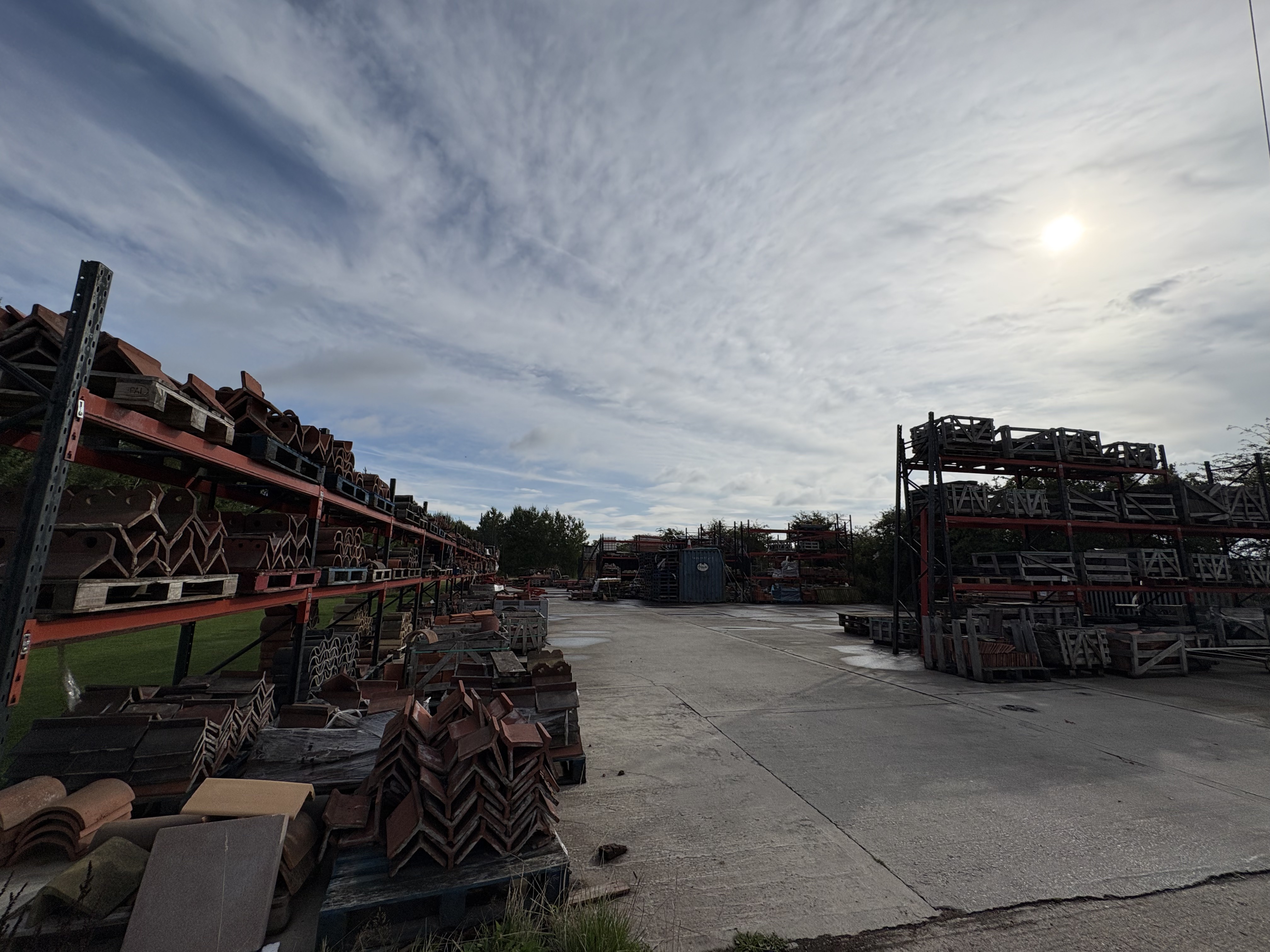
Reclamation yards provide the physical link between recovery and reuse: a place where materials can be organised, stored, understood and connected with another project.
The rows of roofing materials, bricks, stone and architectural salvage found in a reclamation yard are effectively materials waiting for their next building.
The information problem
One of the biggest obstacles to large-scale reuse is information.
That material is technically available, but practically difficult to specify.
Useful reclaimed-stock information can include:
As reclaimed-material markets become more digital, accurate information may become almost as important as the physical material itself.
Why embodied carbon is changing the conversation
The construction industry's growing focus on whole-life carbon is also strengthening the argument for reuse.
A large amount of carbon can already have been emitted during the extraction, manufacture and transport of a building product before it is installed.
When an existing material can be reused rather than replaced with an entirely new product, some of that additional demand for new manufacturing can potentially be avoided.
Reuse is not simply about keeping waste out of landfill. It is about getting more useful life from materials that have already been produced.
Not everything can or should be reused
There are important limits.
Some materials may be damaged, contaminated or unsuitable for another use. Structural products may require assessment and testing. Recovering certain items may also be uneconomic or unsafe.
Deconstruction is not about saving everything at any cost. It is about identifying valuable reuse opportunities early enough that they are not accidentally destroyed.
A stronger market makes reuse easier
For deconstruction to work effectively, there needs to be demand for the materials being recovered.
Demolition and refurbishment projects identify and preserve useful stock.
Reclamation yards and digital platforms organise and present what is available.
Builders, architects and homeowners can find material suitable for their projects.
A demolition contractor is much more likely to separate and preserve a material if there is a clear route to selling or reusing it.
Likewise, builders, architects and homeowners are more likely to specify reclaimed products if they can easily discover suitable stock and understand exactly what is available.
We need better recovery from buildings, but we also need better ways of connecting recovered material with its next user.
From waste stream to supply chain
The most significant change may ultimately be one of mindset.
A roof tile removed from one building does not automatically become waste.
Neither does a brick, timber beam or piece of stone.
A reclaimed product may simply be a building material waiting between its first application and its next one.
When materials are treated in this way, demolition sites begin to look less like the end of a supply chain and more like the beginning of another one.
The opportunity for the reclaimed industry
For the UK's reclamation sector, this shift creates a significant opportunity.
Reclamation yards already possess much of the expertise needed to recognise, sort and redistribute traditional materials.
Understand recoverable materials before demolition starts.
Protect more material from unnecessary damage.
Clean, sort, assess and organise useful stock.
Record quantity, condition, dimensions and provenance.
Make suitable material easier for buyers to discover.
The end of one building could become the beginning of another
Deconstruction asks a fundamentally different question from conventional demolition.
Instead of asking only how a building should be removed, it asks what is worth preserving before it disappears.
That means identifying materials earlier, recovering them more carefully and creating a stronger route from demolition site to reclamation yard to future project.
If that happens, the building of the future may increasingly contain materials recovered from the buildings of the past.
Have reclaimed building materials available for reuse?
Quality materials recovered from demolition, refurbishment or redevelopment could begin another useful life.
Sell Reclaimed Materials →