
Reclaimed vs New: Is Reclaimed Building Material Actually Better Value in 2026?
2026-09-02
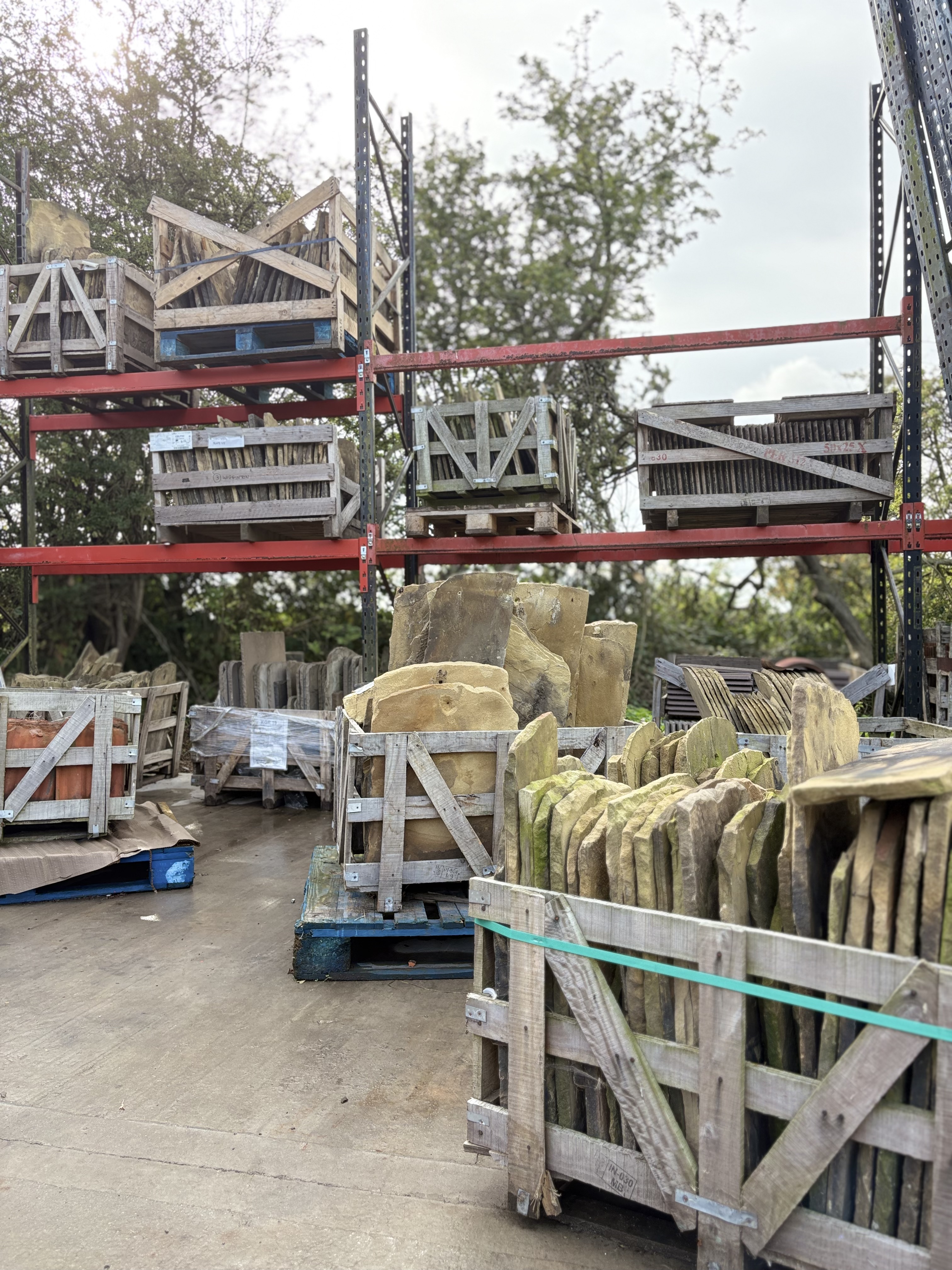
Reclaimed vs New: Is Reclaimed Building Material Actually Better Value in 2026?
The cheapest material to buy is not always the material that offers the best overall value. Matching, transport, preparation, durability, scarcity and appearance can all change the real cost of a project.
When choosing building materials, price is usually one of the first things people compare.
That can make the question of reclaimed versus new sound straightforward: which one costs less?
In reality, the answer is more complicated.
The cheapest material to purchase is not always the material that produces the best result once matching, preparation, transport, suitability and long-term outcome are considered.
Availability, matching, transport, preparation, appearance, durability and even the difficulty of replacing an unusual historic material can all influence the real cost.
Construction material prices remain an important factor
The cost of new construction materials continues to matter across the UK building sector.
Government construction-material statistics have shown annual increases in the overall price index for building materials, adding further pressure to project budgets.
That does not automatically mean reclaimed material is cheaper.
Abundant reclaimed materials may compare favourably with newly manufactured alternatives.
Rare, difficult-to-recover or highly desirable material may be considerably more expensive.
The more useful question is not simply whether reclaimed is cheaper, but whether it represents better value for the specific job.
Purchase price is only one part of the calculation
A newly manufactured product usually has one major advantage: standardisation.
Sizes, quantities, specifications and delivery arrangements are generally predictable. For large projects, this simplicity can be extremely valuable.
Reclaimed material can require more work.
Reclaimed material may need cleaning, sorting, measuring, grading or preparation before it can be reused. Stock can also vary in condition and quantity.
Those additional steps have a cost and should be considered when comparing options.
But the cheapest new product may be the wrong product
For restoration and repair work, price comparisons become much more interesting.
Imagine replacing several damaged bricks in an older wall.
Lower unit price, but colour, dimensions or texture may differ visibly from the existing wall.
Potentially higher unit price, but a much more sympathetic finished repair.
A reclaimed material may cost more per unit and still represent better value if it achieves a result that a standard new product cannot achieve well.
The same principle applies to roofing tiles, stone, timber and architectural features.
Matching can create significant value
Older buildings often contain materials that are no longer produced in exactly the same way.
Older brick sizes may differ from modern equivalents.
Historic profiles may have changed or disappeared entirely.
Colour and grain can depend on a particular quarry or region.
Age, wear and colour develop naturally over decades.
When only a small quantity is required for repair, sourcing reclaimed stock can be more practical than trying to recreate the original material.
In these circumstances, the ability to achieve a sympathetic match is itself part of the value.
Character also has a market value
Not every reclaimed purchase is driven by necessity.
Some buyers actively want the marks of previous use.
Recent UK interior-design trends have shown growing interest in natural materials, darker timber, period features and traditional styles.
For some projects, the buyer is paying for genuine age and individuality — qualities that are difficult to reproduce through mass manufacture.
Where new materials have the advantage
There are many circumstances where new products make more sense.
Large quantities of identical material are required.
A defined modern specification or standard is essential.
The reclaimed alternative would need too much work.
Reliable repeat availability is important.
The programme does not allow for sourcing unusual stock.
Standardisation, warranties and predictable supply remain strong advantages of newly manufactured products.
Reclamation is not about arguing that old is always better than new.
Where reclaimed materials can have the advantage
Reclaimed products become particularly attractive in a different set of circumstances.
An existing historic material needs to be repaired sympathetically.
A modern equivalent may not exist.
Genuine ageing and surface variation are desirable.
The project involves restoration or conservation.
Suitable existing stock may already be available.
The project prioritises circularity and retaining existing resources.
The strongest case for reclaimed material is therefore often project-specific rather than universal.
Reclaimed vs new: where does each one tend to win?
Transport can change the economics
Location is another factor that is easy to overlook.
A reclaimed product may look inexpensive until delivery is added, particularly if it is heavy or fragile.
Stone, bricks and roofing materials can all be costly to move over long distances.
Finding suitable reclaimed material closer to the project can improve both cost and practicality.
Preparation needs to be included in the price
Reclaimed materials may require work before installation.
A sensible comparison should therefore consider the material in a usable condition rather than comparing headline purchase prices alone.
A reclaimed item that appears cheap but requires extensive labour may ultimately cost more than expected.
Scarcity can work both ways
Scarcity is particularly important within reclamation.
A common reclaimed roof tile may be relatively inexpensive.
A discontinued profile may command a much higher price because realistic alternatives are limited.
This makes reclaimed-material pricing different from many standard building products.
The value of an item can depend heavily on how difficult it is to replace and how urgently somebody needs that exact material.
There is also an environmental value
Price is not the only measure of value.
Reusing an existing building material can extend its useful life and reduce the need for an equivalent new product to be manufactured for that particular use.
For clients or projects with sustainability objectives, reuse may therefore provide value that does not appear directly on an invoice.
Better information makes price comparison easier
One of the difficulties in comparing reclaimed and new material is that reclaimed stock is less standardised.
A clear listing can reduce that uncertainty.
A strong reclaimed-material listing can include:
Dimensions, quantity, condition, photographs, location and any known provenance allow a buyer to judge much more quickly whether the material is suitable.
Better information makes reclaimed materials easier to compare not only with other reclaimed products, but with new alternatives too.
So, is reclaimed actually better value?
There is no credible argument that reclaimed material will always be cheaper or always be the correct choice.
For highly standardised construction, buying new can be simpler and more economical.
But where matching, scarcity, character, heritage or reuse are important, reclaimed products can offer value that cannot be measured by purchase price alone.
Reclaimed and new do not need a universal winner
Both have an important role in Britain's building industry.
The opportunity is to make reclaimed materials easier to find and evaluate so that buyers can choose them when they genuinely offer the better solution.
Sometimes that means saving money.
Sometimes it means achieving a better match.
And sometimes the value lies in keeping a distinctive material in use for another generation.
Have reclaimed building materials to sell?
Quality building materials could offer real value to another restoration, renovation or construction project.
Sell Reclaimed Materials →