
Matching Old Buildings Properly: Why the Right Brick, Stone, Slate or Tile Matters
2026-09-02
Matching Old Buildings Properly: Why the Right Brick, Stone, Slate or Tile Matters
When an older building needs repair, finding something that is simply the right size is rarely enough. Colour, texture, profile, age, weathering and regional character can all determine whether a repair blends in or stands out.
When an older building needs repair, finding a replacement material that is simply the right size is rarely enough.
The colour, texture, profile, age and regional character of the material can all affect how convincing the finished work looks.
The right material needs to do more than fit physically. It should also sit naturally alongside the building that is already there.
That is why matching traditional buildings properly often depends on more than buying the nearest modern equivalent.
Whether the project involves brick, stone, slate, clay tiles or another traditional material, carefully selected reclaimed materials can help new repairs sit more naturally alongside the existing building.
Why matching matters
Traditional buildings develop their appearance over time.
Materials weather, colours soften and individual components gain variations that are difficult to recreate artificially.
A modern replacement may perform perfectly well, but if its colour, surface finish or profile is noticeably different, the repair can stand out immediately.
A patch of bricks that is too bright, a roof tile with the wrong profile or stone with a noticeably different texture can interrupt the visual continuity of an older property.
Historic buildings are often defined by their materials
The materials used in older buildings are not simply functional.
They are often an important part of the building's character.
Historic England emphasises the importance of using appropriate and compatible materials when repairing traditional buildings, particularly where the existing materials contribute to the appearance and significance of the property.
Local building materials can also help create regional character.
A visually close modern material may still feel noticeably different if its texture, dimensions, geology or manufacturing characteristics do not align with the original building.
Reclaimed bricks: more than just the right colour
Matching old brickwork can be particularly challenging because historic bricks vary enormously.
Colour is important, but it is only one part of the match.
Overall tone and variation across the face.
Historic bricks may differ noticeably in height, width and depth.
Handmade, machine-made and worn surfaces can all read differently.
Older bricks may have softer, less uniform edges.
Variation from manufacture can contribute to character.
Existing ageing affects how the brick reads in a wall.
Older handmade bricks may have irregular faces and softer edges, while more modern bricks are often considerably more uniform.
A clean, uniform brick can make a repair obvious.
Existing wear and irregularity can help the repair blend more naturally.
Stone can be even more specific
Stone presents a different set of challenges.
The appearance of natural stone can vary according to geology, quarry location, grain, mineral content and the way the stone has been worked.
This means that two stones described using the same broad colour may look very different once installed next to each other.
Historic England has also highlighted that some traditional building stones are becoming increasingly difficult to source.
Reclaimed stone can become particularly valuable where a sympathetic modern source is unavailable or where a closer regional match is required.
Roofing materials are highly visible
Roofing is another area where matching matters enormously.
Traditional roofs can contain clay tiles, concrete tiles, natural slate, stone slate and a wide variety of regional profiles.
The shape of the tile or slate affects the rhythm of the roof.
Small changes can alter how adjoining materials sit together.
A new patch can become obvious against decades of weathering.
Texture and wear change how the roof reflects light.
A replacement tile that is slightly different in shape, thickness or colour can be surprisingly noticeable once repeated across a roof.
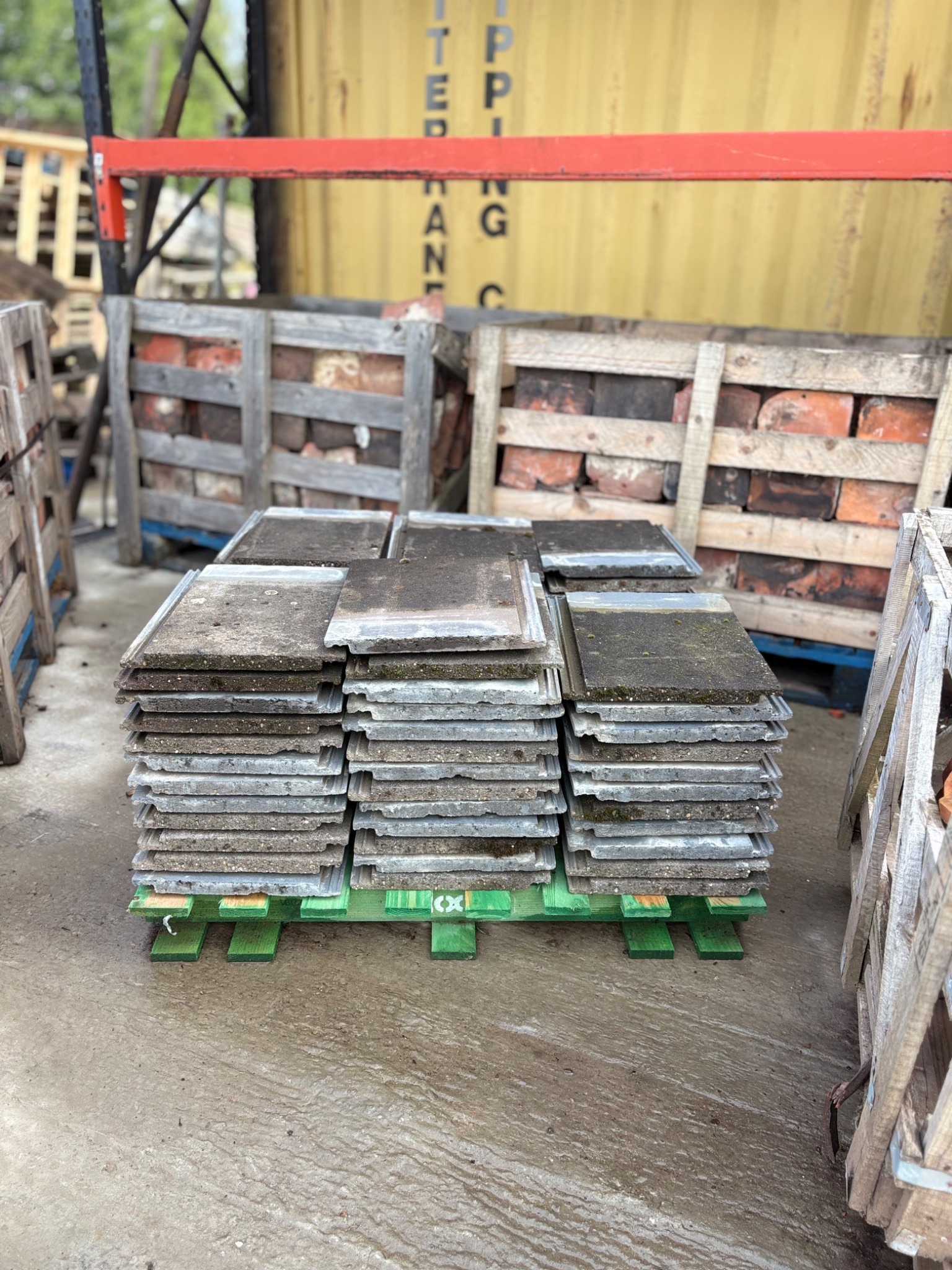
Reclaimed roofing materials can be especially useful where only a limited number of tiles or slates need replacing and the aim is to avoid creating a visibly new patch.
Age and weathering are part of the match
One of the most difficult characteristics to manufacture is genuine ageing.
Rain, frost, sunlight, pollution and decades of exposure gradually change the appearance of building materials.
This weathering is often precisely what makes an older building look established and coherent.
It may eventually weather towards the existing building, but the process can take years.
Weathering and softened colour can help the repair blend from installation.
Matching is not only about appearance
Visual similarity is important, but compatibility also matters.
Traditional buildings often behave differently from modern construction.
The aim should not simply be to find something that looks old, but to find a material that is appropriate for the building and the intended use.
For significant repairs, listed buildings or specialist conservation work, appropriate professional advice is essential.
Why reclaimed materials can make the search easier
Reclamation yards can hold materials from many different periods, manufacturers and regions.
That variety is one of their greatest strengths.
Instead of choosing from a limited range of newly manufactured products, a buyer may be able to compare different batches of reclaimed brick, slate, stone or tile until a closer match is found.
For builders, roofers and restoration specialists, access to different reclaimed batches can make the difference between an obvious repair and one that feels as though it has always belonged.
What should you look for when matching materials?
The exact requirements will depend on the material, but several factors are worth considering.
Including variation within the batch.
Length, width, height and thickness where relevant.
Smooth, rough, handmade, sawn, tooled or weathered.
The form of the original material matters as much as the face.
How established and aged the material already appears.
Manufacturer or maker where known.
Particularly useful for local stone, brick and roofing traditions.
The material still needs to be suitable for reuse.
The better the information available about both the existing building and the reclaimed material, the easier it becomes to make a sensible match.
A small detail can affect the whole building
The importance of matching materials can seem minor until the repair is complete.
A single replacement brick, slate or tile may be small, but repeated across a wall or roof, those differences become much more noticeable.
Sometimes the most appropriate material for an old building is another material that has already grown old itself.
Keeping traditional materials in circulation
There is also a wider benefit to keeping good-quality traditional materials in use.
When bricks, stone, slate and tiles are carefully recovered rather than discarded, they remain available for future repairs and restoration projects.
That helps preserve a supply of materials that may be difficult, expensive or sometimes impossible to reproduce exactly.
Good matching protects more than appearance
Older buildings gain much of their identity from the materials that already form part of them.
Matching those materials properly means considering colour, dimensions, texture, profile, weathering, origin and compatibility rather than choosing the nearest visual substitute.
Reclaimed materials can be particularly useful because they preserve a supply of products that already share many of the characteristics found in Britain's traditional building stock.
In many cases, reclaimed materials are not simply a design choice. They are an important resource for maintaining the character of older buildings for the next generation.
Have traditional building materials to sell?
Reclaimed brick, stone, slate, tile and other materials could provide the match another restoration or repair project needs.
Sell Reclaimed Materials →