
What Can You Find on Reclaimed? A Guide to Reclaimed Building Materials
2026-09-03
What Can You Find on Reclaimed? A Guide to Reclaimed Building Materials
Reclaimed building materials cover far more than old bricks and roof tiles. From stone, timber and flooring to architectural salvage and decorative features, the marketplace can bring together a wide range of materials from different periods, projects and locations.
Reclaimed materials are often associated with restoration and heritage projects, but their uses are much broader than that.
They can be used for repairs, renovations, extensions, landscaping, interiors and new design projects where character, compatibility or individuality matters.
The reclaimed market includes practical construction materials, decorative products, architectural features and unique items that may be difficult to find through conventional suppliers.
Because listings can come from different sellers, locations and projects, the range available can change constantly.
That variety is part of what makes reclaimed materials useful.
Reclaimed bricks
Bricks are one of the most familiar reclaimed building materials.
Older buildings can contain bricks with colours, dimensions, textures and manufacturing characteristics that are difficult to reproduce exactly with modern products.
Older batches can contain natural variation that gives walls more depth and character.
Older bricks may differ noticeably from standard modern sizes.
Handmade, weathered and previously used bricks can have distinctive faces and edges.
Existing brickwork may need something closer in age, colour or format than a new equivalent.
For repairs and extensions, reclaimed bricks can be particularly useful where the aim is to make new work sit naturally alongside an existing building.
Stone, paving and setts
Natural stone can vary enormously depending on geology, source, finish, age and previous use.
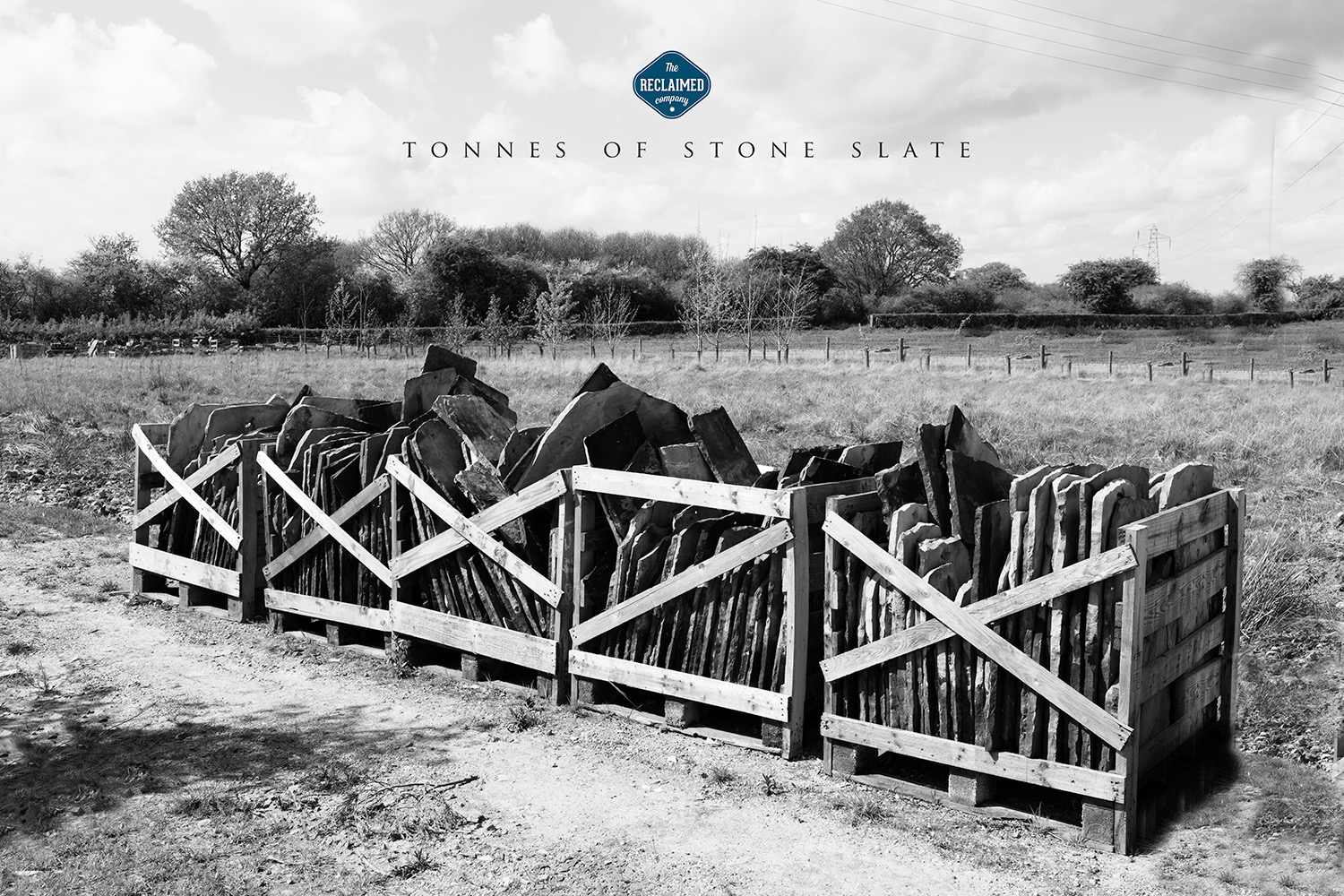
Reclaimed stone may include walling stone, paving slabs, flags, setts, kerbs, steps and architectural pieces.
Useful for repairs, extensions, boundary walls and traditional construction.
Weathered stone can create established-looking paths, courtyards and terraces.
Often used for driveways, edging, landscaping and historic streetscape work.
Individual stone elements can become focal points in restoration or garden projects.
A particular colour, grain or finish may relate closely to the area where a building was originally constructed.
Timber and flooring
Reclaimed timber can come from structural work, floors, interiors, industrial buildings and older joinery.
The age and previous use of the timber can give it a surface, colour and character that is difficult to reproduce artificially.
Useful where uniformity and standardisation are the priority.
Marks, patina, grain and previous use can become part of the design.
Roof tiles and slate
Roofing materials are another major area where reclaimed stock can be particularly useful.
Older roofs may contain specific profiles, colours, thicknesses or regional materials that are difficult to replace with a modern equivalent.
Traditional profiles and weathered colour can help repairs blend into an existing roof.
Size, thickness, origin and appearance can all affect suitability.
Particularly relevant to some traditional and regional building styles.
Older or discontinued forms may sometimes be easier to find through reclaimed stock.
For small repairs, finding a reclaimed match can avoid creating an obvious new patch across an otherwise weathered roof.
Flooring with an established character
Reclaimed flooring can bring age and texture into both traditional and contemporary interiors.
Products may include timber boards, parquet, quarry tiles, stone flags and other surfaces recovered from older properties.
One of the attractions of reclaimed flooring is that age is already present.
The wear, variation and patina that develop naturally over time can become part of the finished interior rather than something that needs to be manufactured artificially.
Architectural salvage
Some of the most distinctive reclaimed products are not basic construction materials at all.
Architectural salvage can include individual features removed from older buildings before they are lost, replaced or redeveloped.
Architectural salvage can preserve individual components that may no longer be manufactured in the same way or at the same scale.
Reclaimed materials for gardens and landscaping
Reclaimed materials are not limited to buildings themselves.
Many products can be reused outdoors in gardens, driveways, courtyards and landscaping projects.
Because many reclaimed materials already have an aged appearance, they can sit naturally within established outdoor spaces.
Reclaimed does not have to mean traditional
Reclaimed materials can work just as effectively in contemporary design.
The contrast between old materials and modern architecture can create a strong visual effect, especially where texture and material authenticity are important.
Choose reclaimed materials to sit naturally within an existing historic context.
Use aged materials deliberately within contemporary interiors, extensions and landscaping.
A reclaimed product does not need to return to exactly the same use it had before. Its next application can be completely different.
What should you check before buying?
Reclaimed materials naturally vary, so buyers should look carefully at the information provided with each listing.
Check the actual size rather than assuming older products follow modern standards.
Confirm there is enough material for the intended project, including sensible allowance where appropriate.
Look for wear, damage, residue and other features that may affect suitability.
Reclaimed batches may naturally contain differences between individual pieces.
Heavy materials can make collection and transport an important part of the purchase.
Review both overall images and close-up details where available.
Manufacturer, period or previous location can sometimes help with matching.
Make sure the material is appropriate for its intended use before purchase.
Why marketplace variety matters
Unlike a conventional supplier with a fixed product catalogue, a reclaimed marketplace can contain stock from many different sellers.
That can make the marketplace less predictable, but it can also make it much more varied.
Because reclaimed stock depends on what sellers currently have available, an unusual material may appear only when a particular batch enters the marketplace.
Sometimes the value is in finding something unexpected
Not every buyer begins with an exact product in mind.
Architectural salvage and reclaimed materials can also be discovered through browsing, where an unusual product becomes the starting point for a new idea.
Find a particular brick, tile, stone, dimension or feature.
Browse distinctive materials and let the product influence the project.
The reclaimed market can solve a specific material problem, but it can also introduce materials and features you may never have considered using.
A marketplace built around variety
Reclaimed building materials can include everything from bricks, stone and roof tiles to timber, flooring, doors and distinctive architectural features.
Some are valuable because they help match an existing building. Others are chosen for their age, texture, scarcity or individuality.
The exact stock available will always change as different sellers list different materials.
That changing supply is not a limitation of reclaimed materials. It is one of the reasons the marketplace can contain products that conventional catalogues simply cannot offer.
Looking for reclaimed building materials?
Explore current listings from sellers offering reclaimed, reusable and architectural building materials.
Browse Reclaimed Materials →